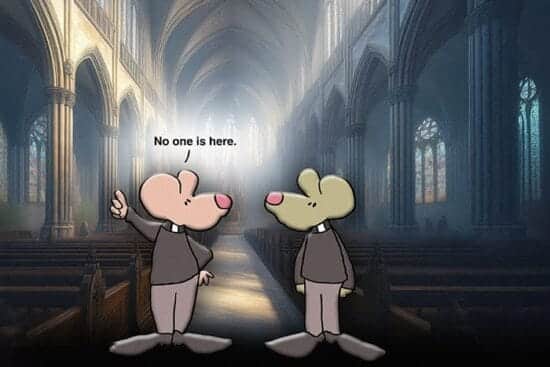
Sometimes our world shifts so quietly that we barely notice. But then. Then there are those other times when the change feels like a huge sledgehammer slamming down. And then there are those things that move gradually, in measured stanzas. Here is one of those things. It is about religion. Lately, more and more people around the world are choosing no religion at all.
A new AP–NORC poll lays it out plainly, and the numbers honestly surprised me.
Here in the U.S., 3 in 10 adults say they have no religious affiliation. Of those people, half call themselves atheist or agnostic. The other half simply shrugs and says their religion is “nothing in particular.”
And the generational divide is notable, to say the least. About 44% of young adults, ages 18 to 29, now say they’re “nones.” Compare that to adults over 60. Only 20% of us older folks don’t have a religion. So yes. This is a quiet shift, but a steady one.
Globally, the trends are pretty fascinating if you ask me. In Japan, 70% of people say they feel nonreligious. In Italy, almost everyone still identifies as Catholic. And yet, only a small percentage of those Italians attend weekly services. And in Israel, a country that seems to be defined by religion, only one-third of those people say they follow traditional worship.
For whatever reason, the tensions between secular and ultra-religious communities have become even more intensified in recent years.
The world has different takes on this. In some countries, being openly nonreligious is still complicated. Or even risky.
In India, atheists often keep their views quiet. And in certain regions, like northern Nigeria, it can be dangerous to publicly step away from belief. The freedom to say “I don’t follow a religion” isn’t universal.
Even with all this shifting about, organized religion still holds strong in America. Two-thirds of U.S. adults still identify as Christian, according to Pew. That number used to be 90% back in the 1990s, which wasn’t that long ago.
It is incredible how fast the landscape can change.
I don’t have grand conclusions here. I just have a lot of curiosity. Why have fewer people quit believing in a god here in the United States and so many other places around the world? What shapes belief? What softens it? What replaces it? Maybe we’re watching one of those cultural pivots that future historians will underline in red pen.
Either way, it says something about how people are seeking meaning, belonging, and identity in new ways. Or maybe different ways.
And that’s always worth paying attention to.
“”””””
“Doubt is not the opposite of faith; it is one element of faith.” — Paul Tillich
“”””””
“Your sacred space is where you can find yourself again and again.” — Joseph Campbell
“”””””
“Where there is doubt, there is room to learn.” — Henry James
“”””””