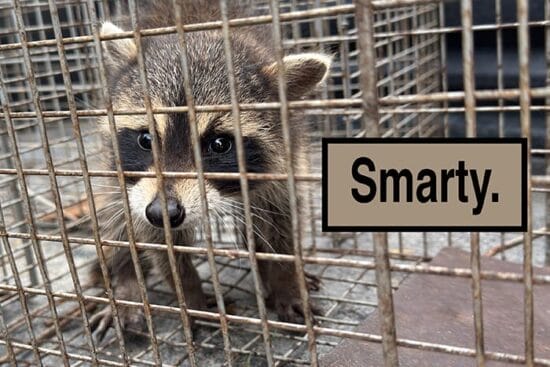
More on animals. The little bandits.
Most people do not like them. Many of us have watched a raccoon tiptoe across our backyards like they own the place. We know that raccoons are extremely clever.
But a new study out of Wyoming suggests they are not just crafty. Our good urban raccoons are full-on problem solvers. They are innovators and surprisingly good students.
Here is what they did in Laramie, Wyoming. Researchers set up a series of puzzle boxes loaded with food rewards. Some boxes had a single latch to figure out. Other boxes offered four completely different ways to get in.
The goal of this study was to see just how adaptable raccoons are when the box puzzle pushed them to think on their little, able paws.
City life is tough for wildlife. We, humans, have encroached on all sorts of animals’ habitats. Asphalt replaces meadows. Noise replaces quiet. And worse than anything, food sources shift constantly.
Those animals either adapt or they disappear.
Raccoons, though, seem to thrive in the challenge. They are endlessly curious and ready to try just about anything once. And they love to eat. So innovation, it turns out, is their survival superpower.
Over two years, scientists tracked 39 raccoons in three locations. The researchers tagged each raccoon so they could study the animals’ behavior individually. And the results were kind of incredible.
Of the raccoons handed the simpler, single-solution box, eight cracked the code. What set them apart was not strength or size. Instead, it was their willingness to explore right from the start. The more a raccoon poked, prodded, and experimented early on, the more likely it was to succeed.
The multi-solution box raised the stakes. Seven raccoons managed to solve several latch types. They were highly adept and switched strategies on the fly. They improvised. Amazingly, the juveniles outperformed the adults. The scientists theorized that the young raccoons had more energy, more curiosity, and more eagerness to take risks.
Experience mattered, too. Those raccoons who solved the simple puzzle often marched confidently into the complex one. They went on to try bolder solutions. As one researcher put it, “Learning begets learning.”
It seems that even in the wild, the more skills you gather, the more your mind wants to keep going.
Why does all this matter? Because it helps us understand how animals think and live, so that maybe we can better share this Earth with them.
Smarts are not just a human trait. Sometimes they are wearing a mask and rummaging through our trash cans with astonishing ingenuity.
AND. Please be smart for the animals in your world. The cold has been and continues to be brutal here. Don’t leave animals outside. Give them shelter, warmth, food, and water. Be kind to our smart, good friends.
“””””””
“Animals are such agreeable friends. They ask no questions. They pass no criticisms.”
— George Eliot
“””””””
“In every walk with nature one receives far more than he seeks.”
— John Muir
“””””””
“Wild animals are less wild and more human than many humans of this world.”
— Munia Khan
“””””””
“Nature is not a place to visit. It is home.”
— Gary Snyder
“””””””