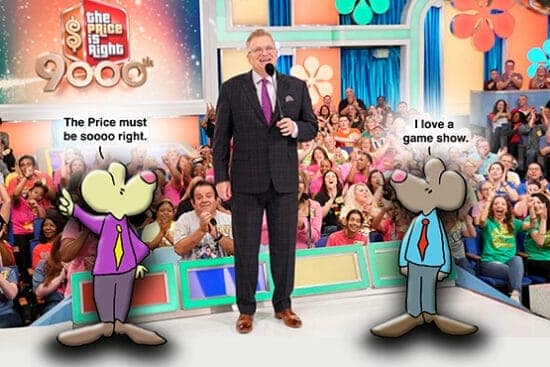
I’ll tell you this much. I like a TV game show. I don’t know why. But when one comes on the television, I get sucked right in. Maybe it’s the competitor in me.
Anyway. Television game shows have been around a long time. Almost since the moment TV sets clicked on and came to life in American living rooms. Apparently, they were there at the beginning. They asked simple questions and handed out some very modest prizes. But probably the big draw was that they invited everyday people to become little TV stars for a day.
The roots of TV game shows stretch back to radio. People love games. So long before those TV pictures were involved, radio audiences loved quizzes, riddles, and challenges they could play along with from home. Huddle around, everybody. It’s time for Professor Quiz.
When television arrived in the late 1940s and early 1950s, those TV bigwigs quickly realized these games were perfect for the new magic box in the living room. Shows like Truth or Consequences made the jump from radio to television. It blended trivia with humor and lighthearted stunts.
The appeal was immediate on both sides of the camera. Game shows were inexpensive to produce. And people loved them. Audiences were captivated.
But then the trouble came around. The genre nearly collapsed in the late 1950s after the infamous quiz show scandals. The TV police realized that some programs had secretly fed contestants the answers. Trust in those game shows was shaken.
As you might imagine, lots of regulations followed. They are fully in place today.
Game shows survived by reinventing themselves. The focus shifted. Those games moved away from high-stakes intellectual contests and toward safer formats. They started to focus more on chance, personality, and audience participation.
The 1960s and 1970s became a golden era. They brought on bright sets and those catchy theme songs. Of course, all this was topped off by charismatic hosts.
Think of shows like The Price Is Right. It became a game where ordinary groceries and appliances turned into objects of wild excitement. But around the same time, Jeopardy! brought intelligence back into the mix. That show proved that viewers still loved knowledge.
By the late 1990s, game shows experienced another resurgence. Big money ruled the day. Who Wants to Be a Millionaire transformed trivia into prime-time theater. Large rewards. Lots of suspense.
Today, game shows are still everywhere. They span cable and all the streaming platforms. They are endlessly watchable. They still do what they’ve always done best, and that is invite us to play along. We’ve all shouted the answers at the screen once or twice. And who knows. We can imagine that it might be us standing there under the lights.
—
If you want, next time I can also do a “bare-minimum Grammarly-style pass” (even lighter than this) or a slightly tighter polish without changing the pacing at all.
“””””””
“Life is more fun if you play games.”
— Charles Dickens
“””””””
“You miss 100 percent of the shots you don’t take.”
— Wayne Gretzky
“””””””
“You can discover more about a person in an hour of play than in a year of conversation.”
— Plato
“””””””