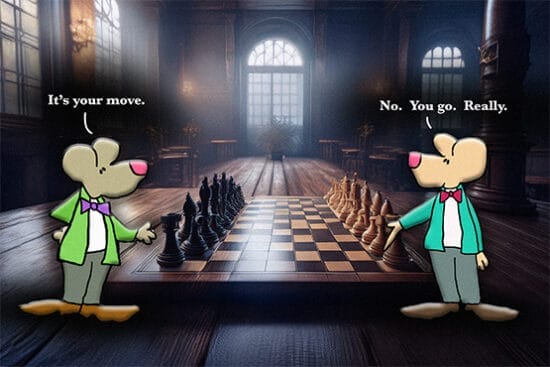
I can play chess. I know the basic rules of the game and the moving capabilities of each piece. But I don’t know a thing about the strategy, other than you are supposed to keep your King. And you are supposed to knock the other person’s King down.
I really haven’t played the game in several decades. I played as a kid. My dad taught me. But the last time I sat down for a game was probably in college. And if I’m guessing, we probably turned it into some sort of drinking game.
Anyway, I appreciate the masters of the game, as I appreciate the great athletes in physical sports.
One guy I recently read about was Paul Morphy. I had never heard of him before, but Paul Morphy was one of the greatest chess players the world has ever seen. And his story is both remarkable and a little tragic.
Morphy was born on June 22, 1837, in New Orleans, Louisiana. He was an average-looking white guy, except he kind of had a Munchkin haircut. You know the kind. It is WAY flippy on top.
Anyway. From a young age, he showed an extraordinary talent for chess. By the time he was just 20 years old, he had already been crowned the champion of the United States.
In 1857, Morphy won the very first American Chess Congress in New York City. His performance was dominant. He defeated Louis Paulsen in the final match with a score of 6–2 and finished the tournament with 14 wins, 3 draws, and only 1 loss. For those of you who are counting.
The following year, in 1858, Morphy traveled to Europe. At the time, Europe was considered the center of the chess world. The place to be if you were competing. Many believed the strongest players lived there. Once he got there? Morphy played match after match against the top European masters and defeated nearly everyone who challenged him.
His main goal had been to face the famous English champion Howard Staunton, but the two never ended up playing. Even so, Morphy’s overwhelming victories against other top competitors led many people to believe he was clearly the best chess player in the world. Apparently, Morphy challenged him. Staunton agreed but would never commit to meeting for a match. He kept putting Morphy off, time and again, so it never happened. Historians feel that Staunton was afraid of getting beaten.
So, Morphy kept playing others. And beating them. After a successful 10-month tour of Europe, Morphy returned to the United States in 1859. He traveled around the country playing exhibition matches. I guess he was a little bit of a celebrity in all of this.
But then something incredibly surprising happened.
Later that same year, at only 22 years old, Paul Morphy retired from chess completely. Despite being at the very peak of the chess world, he refused to compete again.
He returned to New Orleans and tried to build a career as a lawyer, but it was not particularly successful. Morphy lived quietly for the rest of his life and died on July 10, 1884, at the age of 47.
Because his brilliance was so short-lived, Morphy later became known as “The Pride and Sorrow of Chess.” He had conquered the chess world, and then simply walked away from it.
He had mastered the game and all the other players. There wasn’t anything left for him to prove. Also, he did not care for the celebrity of things. So he walked away.
He later had some mental health issues. He was paranoid and thought people were following him.
On July 10, 1884, Morphy returned home after taking a walk in the summer heat. According to accounts from the time, he decided to take a cold bath, which was a common way to cool off in the 1800s. Shortly afterward, he collapsed and died.
Doctors reported the cause of death as a stroke. He was 47 years old.
You would have thought with all that mental acuity that his brain would have been good to go for a long, long time. But someone, somewhere, said, “Checkmate.”
“”””””””
“When you see a good move, look for a better one.” — Emanuel Lasker
“”””””””
“Every chess master was once a beginner.” — Irving Chernev
“”””””””
“Even a poor plan is better than no plan at all.” — Mikhail Chigorin
“”””””””
“Life is like a game of chess, changing with each move.” — Chinese Proverb
“”””””””


