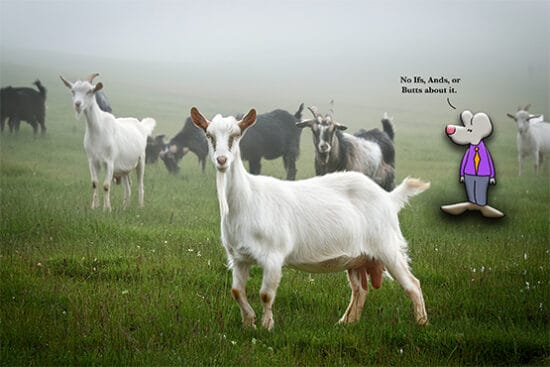
We have goats. Four of them. Gracie. Chaz. Andy. Claude. Now, I don’t know if they have any special talents or not. If they do, they keep it to themselves.
But there are some noteworthy goats in the world. It seems that the city of Los Angeles employs a team of goats known as the Fire Grazers. They eat up dry grass that might otherwise serve as fuel for wildfires.
I wonder if they get a W-4 and have to pay taxes.
Anyway, it is true. Los Angeles and many other California communities have increasingly turned to “targeted grazing” or “prescribed grazing” as part of their wildfire prevention strategy.
I bet it helps quite a bit. They are so challenged out there with fires destroying thousands of acres at a time.
They don’t just eat grass. They chomp down all sorts of things like dry weeds, poison oak, blackberry vines, brush, shrubs, and even small tree branches that many other animals avoid. That makes them especially valuable for reducing wildfire fuel.
They are different than sheep, which are grazers. Goats are called browsers rather than grazers. Like this. They often stand on their hind legs to reach leaves and branches six feet or more above the ground. In the case of the wildfires, this helps to remove what’s known as “ladder fuels.” That is any vegetation that allows fire to climb from the ground into tree canopies.
Another bonus in their firefighting? They can safely work on steep hillsides, rocky canyons, and other terrain. They can get to places where tractors and mowing equipment cannot easily operate.
Goats are tremendously efficient eaters. A herd of several hundred of those furry beasts can clear dozens of acres in just a few days. Of course, this depends on the density of the vegetation. Recent Los Angeles projects have used herds ranging from about 150 to 500 goats and sheep.
You may be wondering how authorities manage things. Well. Portable electric fencing is moved every day or two to guide the herd into a new section. The goats are usually accompanied by herders and large livestock guardian dogs that protect them from coyotes and mountain lions.
Another good thing about this? Unlike lawn mowers, goats don’t require gasoline. Also, they convert all that grazing into natural fertilizer. That helps to reduce the amount of combustible plant material on the ground.
California isn’t alone. Communities in Colorado, Oregon, Washington, Idaho, Utah, Nevada, and several other western states now use goats as part of wildfire prevention programs.
Back here in Ohio, our goats aren’t earning any money. According to the latest available figures from the United States Department of Agriculture, Ohio has approximately 61,000 goats. Of those, 50,000 are meat and other goats. And 11,000 dairy goats. No paychecks for any of them.
So there it is. A little goat story for you today.
“””””””””
“Look deep into nature, and then you will understand everything better.” — Albert Einstein
“””””””””
“Nature does not hurry, yet everything is accomplished.” — Lao Tzu
“””””””””
“Adopt the pace of nature: her secret is patience.” — Ralph Waldo Emerson
“””””””””
“The greatest threat to our planet is the belief that someone else will save it.” — Robert Swan
“””””””””
“The best solutions are often simple ones.” — Ken Thompson
“””””””””