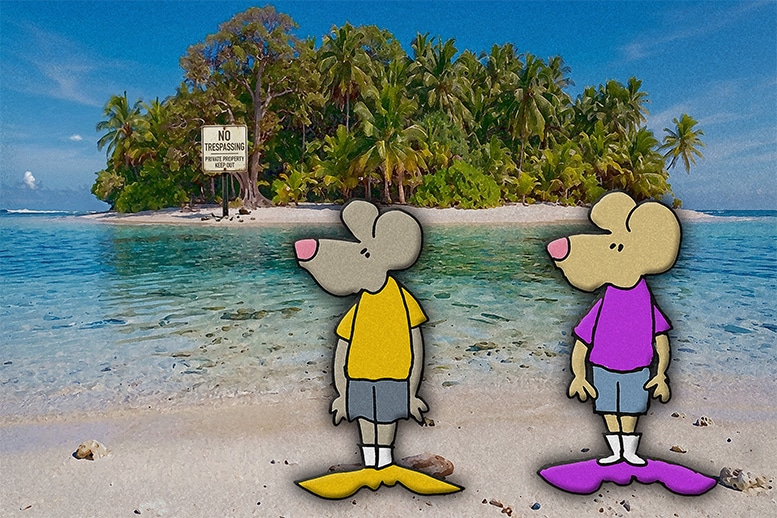
I haven’t pulled my suitcase out in quite some time. I’m such a homebody now. I don’t really have any desire to go anywhere, especially with the hassle that travel has become in recent years. If anything, I’d probably go back to Charleston, SC, for a visit. Or take a cruise on the Great Lakes. Lake Ontario included.
But there are some places I absolutely would not go.
And then there are some places I can’t go. You can’t either. For whatever the reason, these are places most of us will never see firsthand. It is because access is forbidden or highly restricted.
Nonetheless, they are all fascinating. Here are the ten we will never see:
1. Snake Island, Brazil — Ilha da Queimada Grande is home to the golden lancehead, a highly venomous snake found nowhere else on Earth. Public access is prohibited, although authorized researchers may visit.
2. U.N. Buffer Zone, Cyprus — Established after the conflict that divided Cyprus, this strip of land cuts through the capital of Nicosia. Parts contain abandoned homes, businesses, and streets seemingly frozen in time.
3. Tomb of Qin Shi Huang, China — The famous Terracotta Army guards the enormous burial complex of China’s first emperor. His central tomb remains unopened, largely because archaeologists fear damaging whatever lies inside.
4. Chernobyl Exclusion Zone, Ukraine — Created following the catastrophic 1986 nuclear accident, the zone contains areas with radioactive contamination. Access has varied over the years and is now also affected by the war in Ukraine.
5. Area 51, Nevada — This highly restricted U.S. military installation has inspired decades of UFO stories. Its real purpose involves classified military testing and research.
6. North Sentinel Island, India — The Sentinelese people have resisted outside contact for generations. India prohibits outsiders from approaching the island, protecting both the tribe and visitors.
7. Vatican Apostolic Archive, Vatican City — Formerly called the Vatican Secret Archives, this enormous collection contains centuries of Church records. Qualified scholars can gain limited access, but it certainly isn’t open for casual browsing.
8. Fort Knox, Kentucky — The U.S. Bullion Depository holds a tremendous quantity of the nation’s gold. As you might imagine, tourists aren’t invited into the vault.
9. Svalbard Global Seed Vault, Norway — Buried deep inside an Arctic mountain, this remarkable facility safeguards backup samples of the world’s crop seeds. Access is tightly controlled.
10. Lascaux Cave, France — Its extraordinary prehistoric paintings survived thousands of years, but modern visitors began damaging the cave’s delicate environment. The original cave has been closed to the public since 1963, although remarkable replicas can be visited.
If any, I’d probably go to the Vatican Archive or Fort Knox, just out of curiosity. Although I think the Tomb of Qin Shi Huang would be cool. And so would the Lascaux Cave. And just maybe that is part of what makes forbidden places so fascinating. Just like when we were little kids. If you tell us we can’t do something or go somewhere? Well, then suddenly we desperately want to know what’s behind the mystery door.
So to all my friends who are travel buffs. Happy Trails. But just not to those ten.
“”””””””””
“The most beautiful thing we can experience is the mysterious.” — Albert Einstein
“”””””””””
“Mystery creates wonder and wonder is the basis of man’s desire to understand.” — Neil Armstrong
“”””””””””
“The possession of knowledge does not kill the sense of wonder and mystery. There is always more mystery.” — Anaïs Nin
“”””””””””
“Wonder is the beginning of wisdom.” — Socrates
“”””””””””