When I first read her story, my heart broke a little bit. I suppose there are certain moments in history that last only a few seconds, but they affect us deeply.
This was the story of Emily Wilding Davison. And it happened at a horse race.
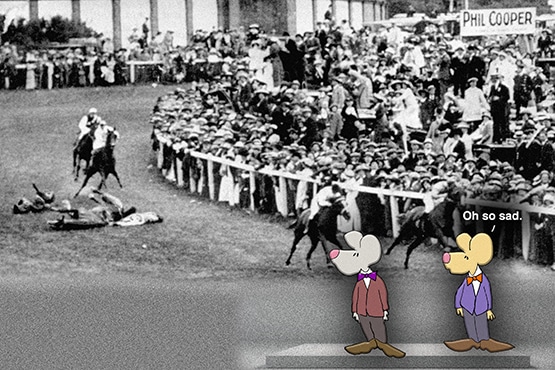
On June 4, 1913, thousands of spectators gathered at England’s Epsom Downs for the Derby. It was one of the most important horse races in the country. As the horses thundered around the track, Emily Wilding Davison stepped through the railing and into their path.
Seconds later, she was struck by a horse named Anmer.
But this wasn’t just any horse. Anmer belonged to King George V.
And Emily Davison wasn’t just any spectator. She was a suffragette.
Born in 1872, Davison was an educated woman who became deeply involved in the fight to give British women the right to vote. She joined the Women’s Social and Political Union in 1906 and became one of its more militant members.
She was arrested repeatedly for her protests and endured force-feeding while participating in hunger strikes in prison. In 1911, she even hid inside the Houses of Parliament overnight so that, for the national census, she could claim Parliament as her residence.
She spent a lot of her life and her energy fighting for women’s equal rights. Especially in the vote.
And then came that Derby.
Davison stepped onto the track as the horses approached. Film cameras happened to be recording the race, so the horrifying collision was captured on film.
Anmer struck her and sent both his jockey and Davison crashing to the ground. Davison suffered severe head injuries and never regained consciousness. She died four days later, on June 8. She was 40 years old.
For years, the story has often been told that Davison deliberately sacrificed her life for women’s suffrage.
But she left no explanation of what she planned to do that day. Some historians believe she intended to attach a suffragette flag or scarf to the king’s horse. She also had a return train ticket with her, which suggests she may have expected to go home afterward.
Whatever she intended, her death became a powerful symbol of the suffrage movement. Thousands attended her funeral procession, and fellow suffragettes honored her as a woman who had given her life to their cause.
Even then, however, British women did not immediately receive equal voting rights.
In 1918, some British women over age 30 were finally given the vote. Full voting equality with men did not arrive until 1928.
One thing is for sure. Emily Davison never lived to see either victory.
But because of her and many like her, women now have the right to vote in England.
It should have been a given.
“”””””””””
“Courage calls to courage everywhere.” — Millicent Fawcett
“”””””””””
“The future depends entirely on what each of us does every day.” — Gloria Steinem
“”””””””””
“The most courageous act is still to think for yourself. Aloud.” — Coco Chanel
“”””””””””