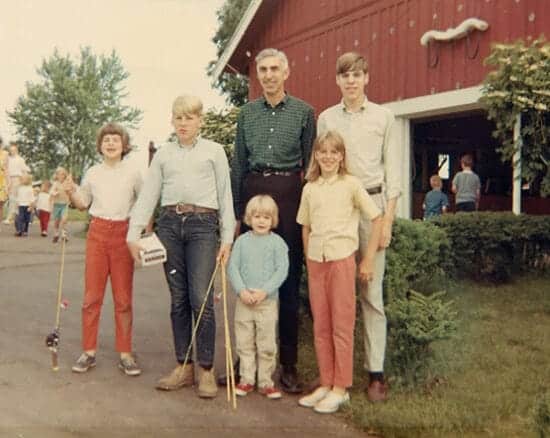
Remember what it was like when you were a kid?
I suppose part of this depends on your age.
But when I was a child, I sure did know how to play. I could entertain myself for hours on end. I would escape for hours into worlds of make-believe.
I could go running through the back screen door just after breakfast and stay outside until the street lights dimmed at night. And all that time, I was happy to be out in the world, playing games, watching clouds, and discovering new worlds everywhere I went.
I could be anything or anyone. My mind knew no limits. So I hopped fences, rescued mice, and became a secret agent for the government, sneaking around and spying on the entire neighborhood.
But then. Somewhere in adulthood, that all went away. You see, when we reach a certain age, many of us forget the essential art of playing.
We lose our child selves. Darn it.
But it is so important.
Children don’t simply play because they have free time. Play is how we, as children, learn, experiment, solve problems, process emotions, build relationships, and imagine possibilities.
And here is the thing. Neuroscientists often describe play as one of the primary ways the developing brain organizes itself.
Somewhere along the way, many adults begin to treat play as something frivolous rather than something essential. But, research over the past few decades suggests that’s probably a mistake.
When we play, our brains don’t simply “shut off.” In many ways, they become more flexible. Play encourages creativity and divergent thinking. It makes us better problem solvers. It helps with our emotional resilience. And on.
Play also stimulates the release of dopamine. Dopamine is that wonderful neurotransmitter involved in motivation, learning, and pleasure. That doesn’t just make play enjoyable. It helps us learn more effectively.
There are experts on this topic. One of the leading scientists is Stuart Brown. He argues that humans are biologically designed to play throughout life.
After studying thousands of people over decades, Brown concluded that a lack of play often contributes to “burnout, anxiety, rigidity, and even relationship problems.” He describes play as being just as important to adults as sleep, nutrition, and exercise.
I suppose we think we stop pretending. But maybe we don’t. Maybe things just shift a little bit in different directions.
We change the form of how we play.
Reading novels.
Writing stories.
Playing music.
Painting.
Role-playing games.
Theater.
Video games.
Gardening.
Woodworking.
And all sorts of other ways. Like cooking. Or knitting.
These activities take us way into another mental space. It is where curiosity replaces the mundane.
Even with all of that, our “childhood play” no longer exists. Our society tends to reward productivity. So many adults often believe that every hour should accomplish something measurable. If an activity doesn’t earn money? Or check some item off a list? To most of us, it feels like wasted time.
If we could only get back to that at will. Back to that place where our “kid” selves approach the world asking, “What could this become?”
History’s greatest discoveries, inventions, and works of art often began with someone willing to imagine something that didn’t yet exist.
Maybe we need to find this again.
George Bernard Shaw once said, “We don’t stop playing because we grow old; we grow old because we stop playing.”
May we all stay, forever young.
“”””””””
Play is our brain’s favorite way of learning.” — Diane Ackerman
“”””””””
“It is a happy talent to know how to play.” — Ralph Waldo Emerson
“”””””””
“Almost all creativity involves purposeful play.” — Abraham Maslow
“”””””””
“The true object of all human life is play.” — G. K. Chesterton
“”””””””