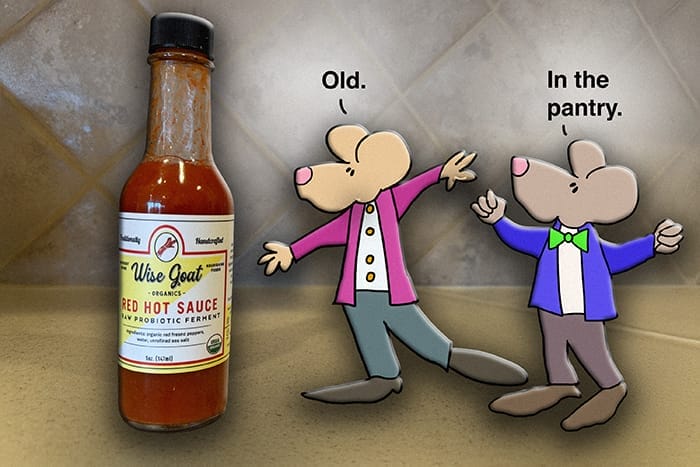
I check the expiration dates in our pantry. Those things that get old.
But this is different. This is a different kind of old. It’s about those old snacks.
Some of the snacks in our pantries have been around a long, long time—so long, in fact, that they could’ve been nibbled on by cowboys, carrier pigeon operators, and the people who polished the Statue of Liberty’s toenails.
We tend to think of food brands as modern conveniences. But a surprising number of them were born centuries ago.
Take Keebler, for instance. Godfrey Keebler opened his little Philadelphia bakery in 1853.
That was seven years before Abraham Lincoln was elected. By the time the Civil War broke out, Keebler was supplying hardtack to Union soldiers. Lincoln was wrestling with secession, but somewhere out there, those little elves were working away so a soldier could’ve enjoyed those early Keebler baked goods.
Then let’s skip ahead to 1872. That was when outlaw Jesse James was busy holding up banks and trains for dough — but another kind of dough was in the works. Pillsbury was getting serious about flour.
Charles A. Pillsbury was buying up mills in Minneapolis and using new grain and steam-rolling technology to dominate the flour game. Pillsbury was moving into the market to become the backbone of American biscuits and pies.
I love a good hot something-or-other — and one of those things is Tabasco. It came on the scene in 1868. The U.S. was trying hard to stitch itself back together after the Civil War, while Edmund McIlhenny was bottling fiery red pepper sauce in Louisiana just as Southern states were being readmitted to the Union. Reconstruction politics were messy and heated — but Tabasco gave us a new kind of heat.
Some brands feel surprisingly “electric-age,” but they’re really candle-era babies. Entenmann’s and Jell-O both date to 1898. Back then, most American homes were still lit by candles or gaslight. William Entenmann was delivering breads and cakes by horse-drawn wagon to those homes. At the same time, a man in LeRoy, New York, was experimenting with wiggly, fruit-flavored gelatin. His name was Pearle Bixby Wait, and he worked on it with his wife, May M. Davis Wait.
Then there’s Coca-Cola. It was officially incorporated in 1892 — the very same year Ellis Island opened its doors. As millions of immigrants walked through those hopeful halls, Coca-Cola soda fountains began popping up across the country. It quickly became part of the American backdrop. A Coke and a smile. I wish the U.S. would go back to welcoming people here.
So, all these things started a long time ago when history thundered forward with wars, outlaws, progress, and inventions. But at the same time, someone else was baking or bottling or stirring or mixing. They were creating the foods that would eventually land on our very ordinary shelves. In our pantries.
Hopefully, not expired.
“””””””
“Food is culture, habit, craving, and identity.” — Jonathan Safran Foer
“””””””
“The more you know, the more you can create. There’s no end to imagination in the kitchen.” — Julia Child
“””””””
“History is not just in books — sometimes it sits quietly in your cupboard.” — Alan Newman
“””””””
“The oldest foods aren’t just recipes — they’re memories.” — Michael Pollan
“””””””


