How Do We Know How To Speak By Linda Stowe
How do we know how to speak? We learn by listening to others and trying to translate what they say into something meaningful. There is no one-size-fits-all guide that we receive at birth. If that were the case, just think about how large it would be—volumes on vocabulary, grammar, usage, punctuation, and meaning. The English language alone contains well over a million words.
I thought about this today when I came across the word deuce. It’s not a word I use or even hear very often, but I knew what it meant—or at least I thought I did. As it turns out, deuce is slang for a variety of things: the number two, a drunk driving violation, a .22 caliber gun, or a modified 1932 Ford coupe. It can also be an interjection expressing annoyance, or appear in phrases like “drop a deuce” (to defecate) or “deuces” (goodbye). And in card games, of course, deuces are wild. So if I heard someone say the word deuce, I would have to know the context—another long, invisible volume in that imagined guide about words and their usage.
We begin learning the meaning of words when we are about a year old, and if we are fortunate, we continue to learn new ones—and the ideas they carry—for the rest of our lives.
Wordle guess words: about, guide, deuce
~~~~~~~
The meaning of words. It is so interesting how we learn these things. And, depending on the teacher, our instructions might just be wrong. Or incredibly right.
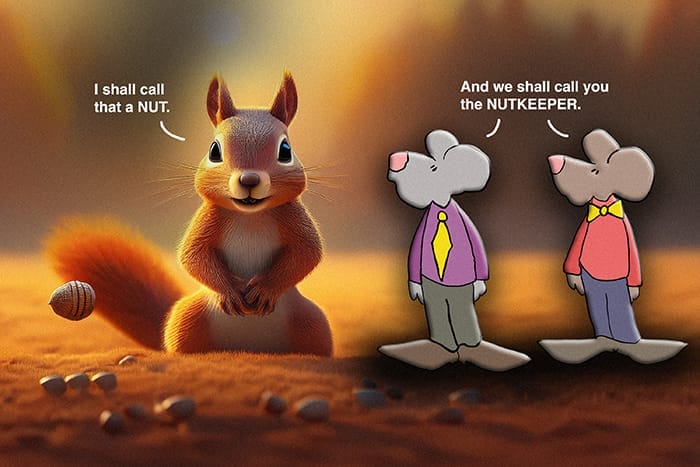
It is amazing to me how we humans even started assigning names to things. When we first evolved, we did not have a vocabulary. Just a bunch of guttural grunts. But slowly, we started calling trees, trees, and pigs, pigs. Wishbones. Pebbles. Donuts. And on and on.
And if that were not enough. They say that the word “run” has 645 definitions. Whew.
https://www.rd.com/article/most-complicated-word-in-english/


