I was thinking about my mom and dad this morning. Both of them were born in Dayton, Ohio. Right in the city. My dad in 1922. My mom in 1923.
As such, by the time they were seven years old, they were faced with growing up during the Great Depression.
Yes, the Great Depression was the worst economic crisis in modern history. It officially began in 1929. And then it lasted throughout most of the 1930s. Historians usually date it from 1929 to 1939. But truthfully, some effects lingered until World War II. The only good thing about that war is that it fully revived the economy. Eventually.
Anyway, the event most people associate with the start of the Depression was the stock market crash in October 1929. Two especially infamous days were:
– Black Thursday — October 24, 1929
– Black Tuesday — October 29, 1929
During those days, millions of shares lost enormous value. And then? A major panic spread across the country.
But the Depression was caused by much more than just the stock market crash. Several major problems had been building underneath the economy during the 1920s. Bank failures, for one. And overproduction of goods. Unemployment followed. And more.
Anyway, my dad especially talked about the trouble they had affording food to eat. Meals were sparse. This was true for a lot of people. And my mom spoke of eating ketchup and crackers for dinner sometimes, and spoiled food from her dad’s grocery store.
People did what they could to eat during the Desperation. They tried to make ends meet.
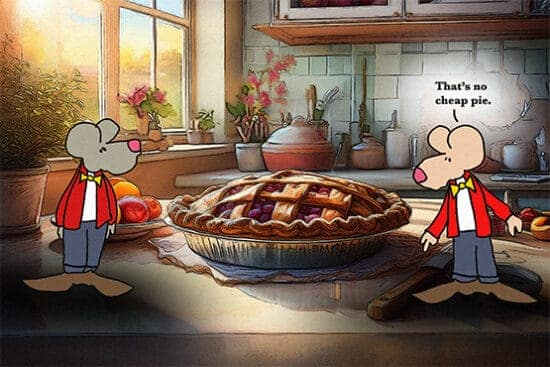
And with that, one food that emerged was pies. People managed to create recipes for pies out of almost nothing. People relied on pantry staples, garden leftovers, and a bit of creativity when baking these gems.
Here are some of the most famous desperation pies.
I did not write these descriptions. I borrowed them from Google searches.
Green Tomato Pie
This pie used unripe green tomatoes in place of apples. Once sliced, sweetened, and spiced with cinnamon, nutmeg, and cloves, the tomatoes took on a texture surprisingly close to apple pie. Lemon juice was often added to brighten the flavor. For families who had gardens but little money, green tomatoes were easy to come by at the end of the growing season.
Shoofly Pie
Shoofly pie comes from Pennsylvania Dutch cooking traditions. It is made mainly from molasses, brown sugar, flour, and crumbs. The filling has a dark, rich sweetness somewhat similar to gingerbread or sticky toffee. There are two versions: “wet-bottom” and “dry-bottom.” The name supposedly comes from people having to shoo flies away from the sweet pie while it cooled.
Chess Pie
Chess pie is a Southern classic made from eggs, sugar, butter, and a little cornmeal or flour. Despite its plain ingredients, it forms a rich custard filling. Nobody is fully sure where the name came from. One theory says people stored the pie in a “pie chest,” which became “chess pie.” Another claims that when asked what kind of pie it was, bakers answered, “It’s jes’ pie.”
Vinegar Pie
Vinegar pie sounds strange today, but it worked as a substitute for lemon pie when citrus fruits were too expensive or unavailable. The vinegar added acidity and brightness to a custard filling made mostly from eggs, sugar, butter, and water. Many people said it tasted surprisingly similar to lemon chess pie.
So yes. A list of the Depression Pies. I’m sure there were soups and casseroles that emerged too. All because of no money.
Food during the Great Depression was shaped by scarcity, thrift, and ingenuity.
Families stretched ingredients in ways that seem unbelievable now. Meatloaf often contained oats or breadcrumbs to make it go farther. Hot dogs were sliced into beans. People reused bacon grease as a cooking fat because nothing could be wasted. (Now, that seems like a win-win situation with the bacon grease to me.)
Another thing is that gardens became incredibly important during the Depression and World War II. This wasn’t always possible for people living in the city. Not much in the way of garden space in those tiny backyards.
But through all of this, some of those traditions and recipes stayed with families for a long time. Some of them, to this very day.
And honestly? Some of those recipes survived not just because they were cheap, but because they were genuinely good. I’ll eat hot dogs in baked beans any old day.
“””””””””
“Poverty is very strange. It is not a lack of money so much as a feeling of loneliness and despair.” — George Orwell
“””””””””
“Hunger makes a thief of any man.” — Pearl S. Buck
“””””””””
“Necessity is the mother of invention.” — Plato
“””””””””
“Waste not, want not.” — Benjamin Franklin
“””””””””