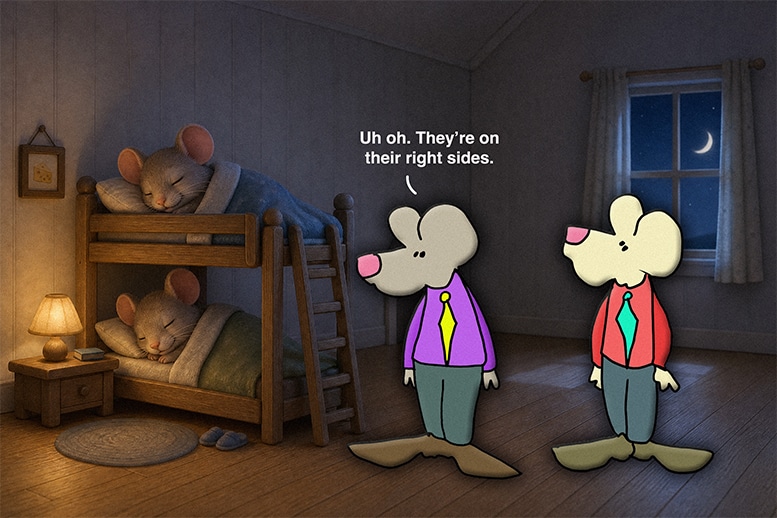
Pillow Talk By Linda Stow
My brother got a new pillow. Well, it was new to him. His sister-in-law passed it along to his wife, who then passed it along to him because neither of them liked it. But for my brother, that pillow was just right. He said it was the perfect height for sleeping on his back, allowing him to sleep comfortably for eight hours. At our age, eight hours of uninterrupted sleep is like finding a unicorn.
Every now and then, my brother talks about sleep, usually about which side he sleeps on. Until this pillow arrived, he was a dedicated left-side sleeper, convinced it was the best position for avoiding heart problems.
That concerned me because I have heart problems, but I sleep more comfortably on my right side. Whenever I try sleeping on my left, I can’t find a comfortable position for my arms, and I worry that I’ll roll out of bed.
All this talk about sleep finally prompted me to do a little research. I found that most people, up to 60%, sleep on their sides. Back sleeping is the next most popular position, accounting for up to 38%, while fewer than 10% of people find stomach sleeping most comfortable.
Each position has its advantages and disadvantages.
Back sleeping keeps the head, neck, and spine relatively aligned and may help prevent stomach acid from traveling up the throat. However, it can worsen snoring and is generally not recommended for people with sleep apnea.
Side sleeping helps keep the airway open, reducing the likelihood of snoring. Some sources suggest that sleeping on the left side may benefit the heart by improving circulation, while others suggest different effects. I also came across a claim that left-side sleeping may support brain health by helping the lymphatic system clear metabolic waste more efficiently.
Stomach sleeping may reduce snoring, but it comes with its own drawbacks. Sleeping face down requires turning the head to one side to breathe, which can strain the neck. It can also put pressure on the back and disrupt the spine’s natural alignment, potentially leading to stiffness and discomfort.
Apparently, our preferred sleeping positions reflect a combination of physical comfort, health needs, and ingrained habits. I’m intrigued by how something as ordinary as the position we sleep in can become such a personal preference. We give little thought to many of our daily habits until something prompts us to look at them more closely. Sometimes, all it takes is a new pillow to get us thinking about something we’ve been doing the same way for years.
~~~~~~~
Ah. The magic of sleep. I love to sleep because it leads me to dreaming. And dreaming is where the magic lies.
The approximate amount of time an average person spends dreaming each night is about two hours. During a typical night’s sleep, the average Joe has about 4 to 6 dreams. Typically.
So. How do we get to that point? Well. About 20–25% is the percentage of an adult’s sleep spent in REM (rapid eye movement) sleep. That is the stage most closely associated with vivid dreaming.
It turns out that around 55% of us have experienced a lucid dream.
A lucid dream is one in which you realize you’re dreaming. About 23% of people experience one at least monthly. I do this all the time.
And. About 83% of us can recall our dreams. I can do this too.
So it breaks down to this. If you live to be 75, you may spend approximately six years of your life dreaming. That is six entire years experiencing people, places, conversations, and weirdness that exist only in our sleeping minds.
On your pillow. Your wonderful, wonderful pillow.