Psychology. It had to begin somewhere. Well. As a formal discipline, psychology began in the late 19th century. But it started way before that. Its roots stretch back thousands of years.
Those good old thinking guys. Those ancient philosophers like Plato and Aristotle explored questions about the mind, behavior, and the soul. Way back when. But their early musings were more philosophical than scientific.
So when was it really born? Psychology officially became a scientific study in 1879. That is when Wilhelm Wundt established the first psychology laboratory at the University of Leipzig in Germany.
As such, Wundt is often called the “father of modern psychology” because he aimed to study the human mind using scientific methods, especially introspection.
From there, probably the three biggest hitters were:
• Sigmund Freud (1856–1939)
Known for: Psychoanalysis
• Carl Jung (1875–1961)
Known for: Analytical Psychology
• B.F. Skinner (1904–1990)
Known for: Behaviorism
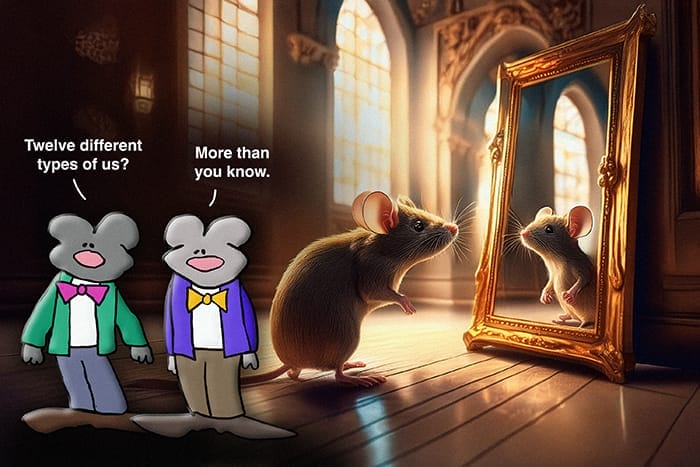
But the one I am thinking about today is Carl Jung. He came up with the model of those 12 Personality Archetypes.
We’ve all wondered why we are the way we are. There has always seemed to be a profound need for an understanding of the human psyche.
Carl Jung gifted us with a map of this understanding. Our psychological landscapes. Our patterns of our deepest motivations, fears, and desires. According to Jung, these archetypes set up the very foundations of our personalities.
So, just what is an archetype?
Jungian archetypes serve as the fundamental blueprints of the human psyche, shaping our perceptions, behaviors, and relationships in ways both conscious and unconscious.
Unlike his other psychology pals, Jung ventured beyond the confines of the conscious mind. He looked into the depths of the unconscious. And with that, he sought to unveil the hidden dynamics that shape our thoughts, emotions, and behaviors.
At the core of his model lies the concept of the psyche as “a multi-layered entity.” It consists of three distinct realms: the conscious, the personal unconscious, and the collective unconscious.
It seems that our conscious mind — which is the realm of our everyday awareness — represents only a tiny little bit of the totality of our psyche.
Beneath the surface lies the vast expanse of the personal unconscious. It is a big, whole thing of repressed memories, forgotten experiences, and latent desires. According to Jung.
Those 12 Jungian Archetypes.
Which one are you?
It seems that I am a combination of about three or four of these. I guarantee you that the adventurer is not one of them. Neither is the ruler.
But the ones that have bits in me: Orphan. Creator. Sage. Magician.
And here they are. The Archetypes.
These descriptions come directly from an article at Psychology Today.
1. The innocent
– Represents purity and optimism, desiring to be happy and free
– Strategy involves doing things right and embracing faith and optimism
2. The orphan
– Desires connection and belonging, fearing being left out or standing out
– Strategy involves developing ordinary virtues, being down to earth, and empathizing with others
3. The hero
– Seeks to prove worth through courageous acts, fearing weakness and vulnerability
– Strategy is to be strong and competent, although may struggle with arrogance
4. The caregiver
– Motivated by a desire to protect and care for others, fearing selfishness and ingratitude
– Strategy involves doing things for others, though may fall into martyrdom and exploitation
5. The explorer
– Craves freedom and authenticity, fearing getting trapped or inner emptiness
– Strategy includes journeying, seeking new experiences, and maintaining autonomy
6. The rebel
– Yearns for revolution or change, fearing powerlessness or ineffectuality
– Strategy involves disruption or shocking, but may risk crossing into crime
7. The lover
– Seeks intimacy and connection, fearing loneliness or rejection
– Strategy is to become more attractive physically and emotionally, but may lose identity
8. The creator
– Strives to create enduring value, fearing mediocrity
– Strategy is developing artistic control and skill, despite struggles with perfectionism
9. The jester
– Embraces joy and humor, fearing boredom or boring others
– Strategy includes playing, making jokes, and being funny, though may struggle with frivolity
10. The sage
– Driven by a quest for truth, fearing being misled or ignorant
– Strategy involves seeking knowledge and understanding, though may struggle with inaction
11. The magician
– Aims to make dreams come true, fearing unintended negative consequences
– Strategy includes developing a vision and finding win-win solutions, though may become manipulative
12. The ruler
– Desires control and prosperity, fearing chaos or being overthrown
– Strategy involves exercising power and leadership, though may struggle with authoritarianism
“”””””””””
“Until you make the unconscious conscious, it will direct your life and you will call it fate.”
— Carl Jung
“”””””””””
“Everything that irritates us about others can lead us to an understanding of ourselves.”
— Carl Jung
“”””””””””
“We are not what happened to us, we are what we choose to become.”
— Carl Jung
“”””””””””
“The curious paradox is that when I accept myself just as I am, then I can change.”
— Carl Rogers
“”””””””””


