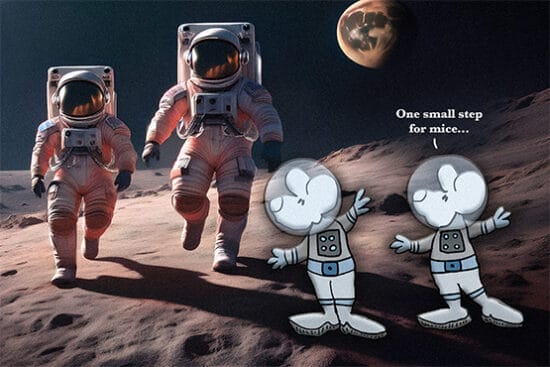
Space is quite the thing. It goes on forever and ever. And we humans feel the need to see what we can see when it comes to the great unknown. Not only in the United States, but all over the world, all throughout history.
That’s right. The ancient cultures tracked the stars.
Babylonians (around 2000 BCE) recorded detailed observations of planets and eclipses. That is a long dang time ago. And the Egyptians used stars to align pyramids and track time. Maya astronomers built observatories and created precise calendars. So. We don’t know their names, but we know those early astronomers existed.
But. One of the earliest astronomers whose name we know is Thales of Miletus (c. 624–546 BCE). He is often called the first scientific astronomer for a lot of different reasons. First of all, he tried to explain the heavens using natural laws, not mythology. Everyone was writing fictitious stories back then. He started looking to science. Also, he is said to have predicted a solar eclipse in 585 BCE.
And. Early Greek thinkers built on all of this. There was a guy named Anaximander who proposed early models of the cosmos. Pythagoras linked math to astronomy. And Aristarchus of Samos suggested the Sun is at the center of everything.
Anyway, in modern times, people have been getting into space ships and going up, and up. Here are some of the firsts.
Yuri Gagarin — first human in space (1961)
Valentina Tereshkova — first woman in space (1963)
Alan Shepard — first American in space (1961)
John Glenn — first American to orbit Earth (1962)
Alexei Leonov — first spacewalk (1965)
Neil Armstrong — first human on the Moon (1969)
Buzz Aldrin — second human on the Moon (1969)
John Young — first Space Shuttle commander (1981)
Robert Crippen — first Space Shuttle pilot (1981)
Guion Bluford — first African American in space (1983)
Svetlana Savitskaya — first woman to perform a spacewalk (1984)
But all of it comes with a cost. Many lives have been lost in the name of space. Just how many depends on how you count, but here’s a clear, factual breakdown.
About 20 astronauts/cosmonauts have died in spaceflight-related missions.
Here are some of the in-flight disasters.
Apollo 1 (1967) — 3 deaths during a launch rehearsal fire
Soyuz 1 (1967) — 1 death (parachute failure on reentry)
Soyuz 11 (1971) — 3 deaths (cabin depressurization)
Space Shuttle Challenger (1986) — 7 deaths shortly after launch
Space Shuttle Columbia (2003) — 7 deaths during reentry
Several astronauts and cosmonauts have died during jet training crashes, test flights, and ground preparation incidents.
And sadly, there have been a lot of animal deaths. Yes, before humans flew, many animals were used in early testing. They didn’t want to go. We humans, made those decisions for them. There were dogs, cats, monkeys, chimps, mice, and many other types of animals.
But the totals mostly go like this.
Human deaths directly tied to space missions: ~15
Including training/test accidents: ~20+
Including animals: many, many more, but the exact totals are not exactly known.
We explore space for the same reason we’ve always looked up and wondered. I think the first thing was that curiosity pulled us that way. We wondered what was out there and how it all worked. We wondered whether we’re alone.
But there’s more to it than questions. There’s a need to push beyond what we know. Part of it is practical. We are trying to protect our future, or maybe trying to find ways to improve life here at home. Although. I think the root of it is harder to name. It might be a recognition. The fact that we belong to something vast and unending. The Heavens and the Earth. Exploring space is our way of reaching upwards toward it.
“”””””
“The Earth is the cradle of humanity, but one cannot live in a cradle forever.” — Konstantin Tsiolkovsky
“”””””
“Curiosity is the essence of human existence.” — Gene Cernan
“”””””
“Man must rise above the Earth—to the top of the atmosphere and beyond—for only thus will he fully understand the world in which he lives.” — Socrates
“”””””
“Exploration is really the essence of the human spirit.” — Frank Borman
“”””””