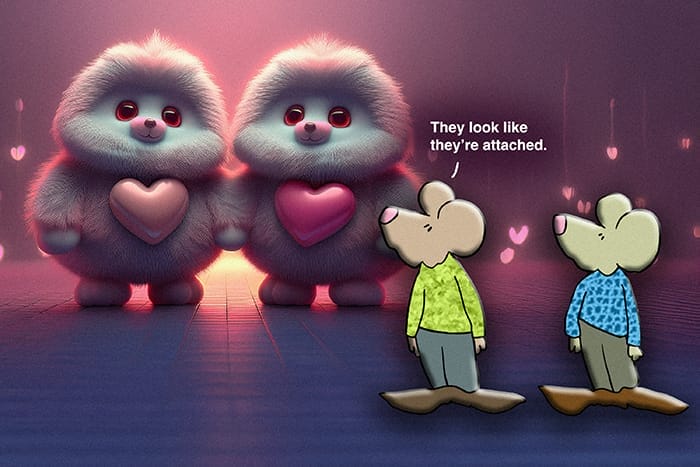
Apparently, I am attached.
I recently read an article about the language of attachment styles. There are four. They are: secure, anxious, avoidant, and fearful-avoidant.
Supposedly, this gives us the new “take” for understanding how we love. But unlike all of those trendy personality quizzes, this one has real scientific roots.
Here’s how it started. Attachment theory began in the 1950s with psychoanalyst John Bowlby. This guy studied how infants responded when separated from their caregivers. Psychologist Mary Ainsworth expanded the idea, and by the 1980s, researchers realized something pretty amazing about all of this.
They found that adults show these same patterns in romantic relationships. The way we bonded early in life echoes forward. The way we were as babies shapes how we are now. And, in this particular topic, it affects how we seek connection, how we react to distance, and what feels safe or threatening in love.
Here are the four types.
Secure attachment
These people tend to feel comfortable with closeness. They express needs openly, trust easily, and assume love is stable. They’re not perfect. They’re just really grounded. Research suggests that about half of us fall here.
Anxious attachment
This group craves intimacy but worries about losing it. They’re sensitive to shifts in attention and may overreact to distance, not out of manipulation but fear. Their nervous system scans for signs of abandonment.
Avoidant attachment
Avoidant people often fear being engulfed. Independence feels safer than vulnerability, so when relationships deepen, they may distance themselves. They can love deeply. But they just experience closeness as something to manage rather than relax into.
Fearful-avoidant (disorganized)
A smaller group moves between wanting connection and fearing it. This is often shaped by early trauma, and this style creates a push-pull dynamic: “Come close… but not too close.”
Here’s the thing that we should all know and remember about this. None of these patterns means something is wrong with us. They’re not diagnoses. They’re simply adaptations that we make in ourselves. They are the smart ways our younger selves learned to stay safe.
Here’s another thing. They’re not fixed. They can change. Relationships, insight, and friendship with secure people can soften old patterns. Therapy can help too. We can learn safety. We can learn trust. We can learn connection.
“””””””
“The meeting of two personalities is like the contact of two chemical substances. If there is any reaction, both are transformed.” — Carl Jung
“””””””
“We are born in relationship, we are wounded in relationship, and we can be healed in relationship.” — Harville Hendrix
“””””””
“Love is the great miracle cure. Loving ourselves works miracles in our lives.” — Louise Hay
“”””””””


