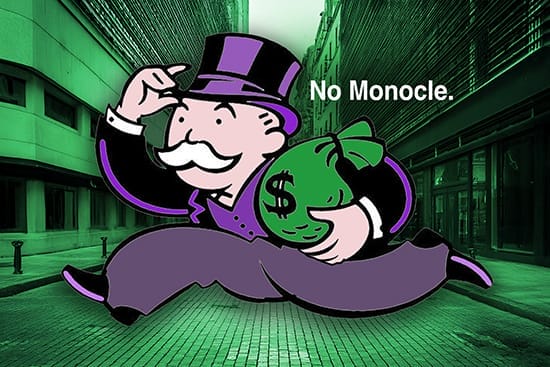
The Mandela Effect By Linda Stowe
Today I came across a term I had never heard before: the Mandela Effect. Google says “The Mandela Effect is a phenomenon where a large group of people collectively share the same false memory about a past event or detail. It is named after the false memory of Nelson Mandela dying in prison in the 1980s, when he actually died in 2013.
Psychologically, it is explained by false memories, which can be influenced by suggestion, confirmation bias, and the brain’s tendency to fill in gaps.”Common examples of the Mandela Effect include:Belief that the Monopoly Man wears a monocle. (He does not.)Belief that the Wicked Queen in Snow White says, “Mirror, mirror on the wall…” when she actually says, “Magic mirror on the wall…”Belief that the Fruit of the Loom logo includes a cornucopia. (It does not.)
Experts say the Mandela Effect can take place in any number of situations. It could be as simple as when the brain fills in gaps in memory with false details to create a coherent story. It is not intentional lying. Our memories are not stored as perfect records. They are reconstructed each time they are recalled, and during this process inaccuracies can be introduced. It’s like trying to describe something clearly while looking into a smoky mirror.
The Mandela Effect does not describe a situation in which someone fell for a spoof or chose to buy into a conspiracy theory. Being exposed to incorrect information through media, conversation, or memes can plant false beliefs but they are not memories. For example, comments about immigrants eating pets in Springfield, Ohio, were widely believed as true because they were purported to be based on eyewitness accounts. When they were later shown to be false, people changed their minds.While pop culture Mandela Effect examples are usually harmless, the phenomenon of shared false memories has serious implications for real-world issues such as relying on eyewitness accounts in the courtroom.
We still aren’t completely clear about the JFK shooting even though it was witnessed by hundreds that day in Dallas.In the Star Wars movie, Darth Vader says, “No, I am your father” to Luke Skywalker after Luke accuses him of killing his father. The line is often misquoted as “Luke, I am your father.” And that is likely how most of us will remember it.Wordle guess words: about, chose, shown, smoky, spoof
~~~~~~~~
Polly here.
This was fabulous. I recently had this same conversation with another friend. I did not know the correct term, “Mandela Effect.” But I said I would love to go back in time and sit at the family dinner table, just to see what our lives were really like back then.
I think I remember how things were. But I had read (as Linda mentioned) that we reconstruct our memories every time we pull them forward. I have scattered recollections of the past. Some are vague. But others are vivid and exact. Or so I think.
But with that is the collective memory, as mentioned in the Mandela Effect. Science has found that human memory isn’t a recording. Instead, it’s reconstructive. And, it can be easily influenced.
This is all so fascinating to me. What do I know, really?
Luke. I am your father.
I thought I knew this.


