I love classical music.
When I sit and listen, I am amazed at the construction of the songs. They’re impossible to me. And so beautiful.
The people who write these masterpieces must have been geniuses.
If you ask music historians to name the greatest composers in history, there is no official ranking. However, four names appear on almost every list because of their lasting influence on Western classical music.
The Top Four
– Johann Sebastian Bach
– Ludwig van Beethoven
– Wolfgang Amadeus Mozart
– Johannes Brahms
Bach is often regarded as the greatest composer of all time, admired for his extraordinary mastery of harmony and counterpoint.
Beethoven transformed classical music with unprecedented emotion and innovation, even after losing his hearing.
Mozart, the child prodigy, composed more than 600 works before his death at just 35 years old and is celebrated for the beauty and elegance of his music.
Brahms carried the great classical traditions into the Romantic era with remarkable craftsmanship and depth.
Many other composers are also considered among the all-time greats. These include:
– Franz Schubert
– Pyotr Ilyich Tchaikovsky
– Frédéric Chopin
– Richard Wagner
– George Frideric Handel
– Antonio Vivaldi
Each left their own incredible mark on music.
Schubert wrote some of history’s most beautiful songs and symphonies.
Tchaikovsky gave the world The Nutcracker and Swan Lake.
Chopin revolutionized piano music.
Wagner transformed opera.
Handel composed the beloved Messiah.
Vivaldi’s The Four Seasons remains one of the most recognizable works ever written.
I wish there were more movies about these guys.
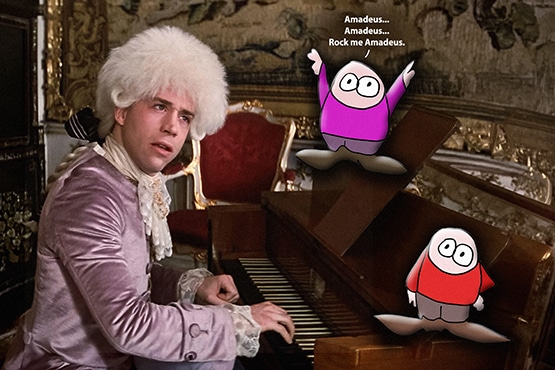
I loved the movie, Amadeus. I loved watching Tom Hulce play him.
But Mozart died in a sad way, according to the film. In real life, though, a lot of mystery surrounds his death.
In late November 1791, Mozart became seriously ill. Historical accounts describe a high fever, severe pain, and significant swelling in his arms and legs. Within about two weeks, he died at just 35 years old. Because no autopsy was performed, doctors could only speculate about the cause. More than two centuries later, researchers are still trying to solve the puzzle.
One of the most famous theories is that Mozart was poisoned. Stories of a rivalry with fellow composer Antonio Salieri became popular through the play and movie Amadeus. While Mozart himself reportedly feared poisoning near the end of his life, historians haven’t found much evidence to support the idea that anyone deliberately killed him.
A more widely accepted explanation is that Mozart suffered from a severe streptococcal infection that led to kidney failure.
Another possibility is that he developed a rare inflammatory disease affecting the blood vessels and kidneys.
And on.
But no one knows for certain. Without an autopsy or preserved remains, no definitive answer is possible.
There are many other mysteries surrounding the other composers too.
They should write a song about that.
Or, as I said, make a few more movies. Buh, buh, buh, buhhhhhhhh…
“”””””””
“The music is not in the notes, but in the silence between.” — Wolfgang Amadeus Mozart
“”””””””
“To play a wrong note is insignificant; to play without passion is inexcusable.” — Ludwig van Beethoven
“”””””””
“Where words fail, music speaks.” — Hans Christian Andersen
“”””””””