It is a sad subject, but one that has touched all of us in some way.
Suicide.
I’ve known a few people close to my life who have committed suicide. And I’m going to write about another today.
The fact is that in the United States, 48,824 people died by suicide in 2024. (That is according to the Centers for Disease Control and Prevention (CDC).)
That amounts to approximately 134 deaths every day, or one every 11 minutes.
More people in the United States commit suicide than in the rest of the world. The U.S. suicide rate was 13.7 deaths per 100,000 people, compared with a worldwide rate of approximately 9.2 per 100,000 in 2021.
Men account for a disproportionately large share of these deaths, with American men dying by suicide at nearly four times the rate of women.
Suicide was the second leading cause of death among Americans ages 10 to 44 in 2024.
It isn’t happening just now. It has been going on since humans became humans.
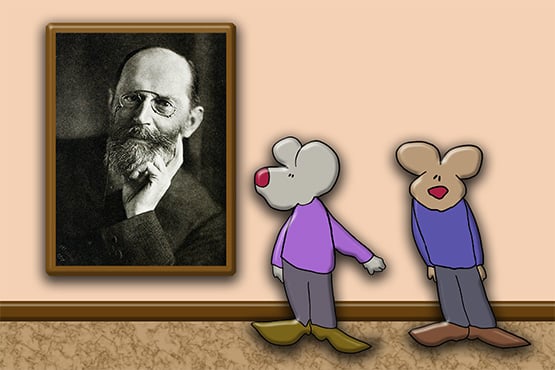
Today, I want to tell the story of Emil Fischer. Today is his birthday: October 9, 1852. His life story is a rather tragic one, especially considering his extraordinary accomplishments.
Fischer was a German chemist who won the 1902 Nobel Prize in Chemistry for his groundbreaking research on sugars and purines. His discoveries helped establish the foundations of modern biochemistry. He was pretty brilliant. Trust me. The Nobel Prize marks brilliance.
But despite his professional success, his personal life was marked by tremendous loss.
His wife, Agnes, died in 1895, leaving him to raise their three sons. Two of those three sons died during World War I. On top of that, Fischer struggled with serious health problems in his later years. He had reportedly been diagnosed with intestinal cancer shortly before his death.
So on July 15, 1919, he decided to take his own life. He died by ingesting potassium cyanide, a highly poisonous chemical. He was 66.
Suicide knows no boundaries.
It affects people of every age, background, profession, and level of intelligence. Even the most brilliant minds, those capable of extraordinary discoveries and accomplishments, are not immune to despair, grief, or emotional suffering.
Emil Fischer’s life reminds us that professional success and intellectual brilliance do not necessarily protect someone from personal struggles.
We never truly know the burdens another person may be carrying. And perhaps that is one of the most important reasons to approach others with kindness, compassion, and understanding.
This day, and every day.
“””””””
“Be kind, for everyone you meet is fighting a hard battle.” — Ian Maclaren (often attributed to Plato)
“””””””
“What wisdom can you find that is greater than kindness?” — Jean-Jacques Rousseau
“””””””
“No act of kindness, no matter how small, is ever wasted.” — Aesop
“””””””