Technology and Convenience By Linda Stowe
The house I grew up in had a big front porch, the size of a whole room. We used it to cool off, to watch the street, to talk with neighbors. Houses today don’t need porches like that. We stay inside climate-controlled rooms and chat about the neighborhood online instead.
That same quiet shift shows up elsewhere. As a child, I learned to tell time by watching the hands of a clock move around its face. I spent years absorbing the slow logic of minutes and hours. Now every clock in my house is digital. The only clockface I see is the icon on my phone.
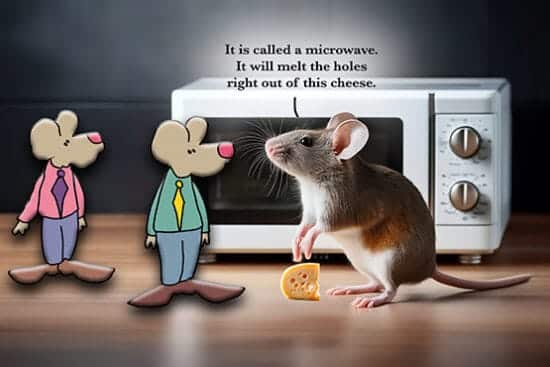
I could go on, but the pattern is clear. Calculators replace mental math. Microwaves replace cooking. Technology saves time and effort—and once we master it, the next version arrives with a little more oomph, and a little more money for the people who sell it.
What’s easy to miss is that these upgrades don’t just change how we live; they change us. A solid example is the growing use of AI in journalism. A reporter recently admitted he no longer spends hours shaping a story because he knows ChatGPT can rewrite it better. He also admitted his critical-thinking skills may be eroding as a result. He is not alone.
The question isn’t whether technology helps us—it clearly does. The question is what happens when the skills we give up disappear so gradually that we barely notice. Several times a day I ask Siri what time it is, even when a clock is close enough that I could see it just by turning my head. Sometimes I ask the question when my phone is in another room and Siri is out of earshot. It’s such a small thing, almost laughable, but it gives me pause. I’m no longer sure whether it’s the ability to tell time that’s slipping, or the habit of noticing what’s already right in front of me. Convenience is helpful, even welcome—but I wonder what it quietly replaces when I stop paying attention.
~~~~~~~
Polly here.
Technology, as Linda so aptly said, saves time and effort. It has made much of our lives easier and more efficient. But so much of it has the capacity to make us lazy. And we lose part of our old “selves” when those extra activities go away.
Every time I regard this topic, the movie WALL-E springs to mind. I replay the scene in my mind when all the humans are on the spaceship in their “floating lounge chairs,” and the computers and robots are doing everything for them.
I wonder how far away we are from that movie scene.
One of the biggest, and perhaps the most detrimental, is the shaping of our children. I think there was a lot to be said for how my generation grew up. We went outside. We found ways to play and entertain ourselves. We invented games. We got loads of exercise. Every day.
And now? Kids lie around on couches and floors staring glassy-eyed at their smartphones and iPads.
The suicide rate in kids today has quadrupled since the 1960s.
I wonder if there is a direct correlation.
Let me say this, though. I think technology is amazing. I am a Geek. I love intelligent progress and all the advancements that we have made through our technology. But with that has to come balance. I think we need to preserve the “old methods” in life and act as stewards and guardians for them.
I think we need to do a better job of caring for this world than what we have been doing.