Royalty. The Kings and Queens and Dukes and Earls.
We have presidents here in the United States. At least, historically, that has been the case. Now we are on the verge of something totally different, thanks to Donny Trump. But that is not what this is about.
When we think about royalty, we sometimes picture velvet capes with those little black speckles on their white furry collars. And of course, we see jeweled crowns and shiny swords.
But history tells a whole other story. Power draws attention to people. And in some cases, it magnifies their flaws. Their instabilities or obsessions. Sometimes it shows us their deeply strange behavior.
So. Behind big palace walls, many rulers’ lives bordered on the bizarre. Some were taken apart by grief. Others were filled up with paranoia. And some of them suffered from mental illness. Back in those olden times, little understanding or compassion for mental illness.
More than anything, many of the royals throughout the past were downright bizarre. Weird. Unstable. Strange in many ways.
It is worth noting how often these stories involve isolation. Most of the time, they were in charge because of inherited power. And with that, there was a complete lack of accountability.
We all know that without limits, huge power can become terribly dangerous.
So here they are. Some of the weirdest Royals throughout history:
Maria Eleonora of Brandenburg. Queen Maria Eleonora was consumed by one thing. She wanted to produce a male heir. When she gave birth to a daughter, Christina, she reportedly recoiled in horror. She used to call the baby girl “monstrous.” Her behavior grew increasingly unstable, with accounts claiming she attempted to harm the child more than once. After her husband, King Gustavus Adolphus, died in battle, Maria Eleonora refused to bury him for over a year. She slept beneath a casket containing his heart. She was locked in an obsessive grief that eventually led Swedish officials to remove her from court life entirely.
Nero. Nero’s reign was full of decadence and cruelty. He got the gig as emperor through his mother Agrippina’s ruthless maneuvering. But wait. Nero later ordered her execution when she became inconvenient. Though he enacted some reforms, his paranoia and self-indulgence overwhelmed any good intentions. He murdered critics. He discarded wives. And. He became infamous during the Great Fire of Rome. Whether or not he started the fire, he exploited the disaster to persecute Christians and indulge his own artistic fantasies.
Princess Alexandra of Bavaria. Princess Alexandra suffered from what historians believe was a psychological condition known as the “glass delusion.” She believed she had swallowed a glass piano. She also believed that her body was fragile beyond measure. Breakable. She moved carefully, sideways through doors, fearing shattering. She lived quietly and didn’t hurt a soul. But her story shows how mental illness could completely imprison someone.
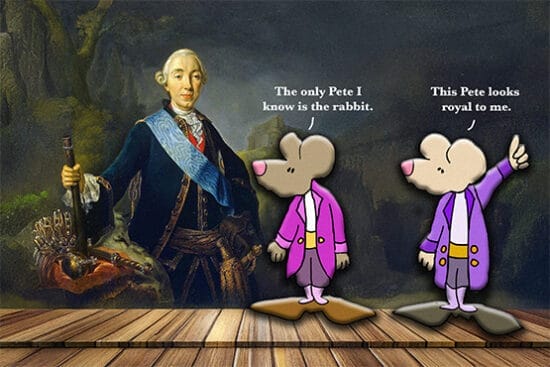
Peter III of Russia. Peter III ruled briefly and disastrously. He was traumatized by an abusive childhood. As a result, he retained childish obsessions well into adulthood. He reportedly played with toy soldiers. He also treated his wife, the future Catherine the Great, with terrible cruelty. He had zero ability to command respect. He could not govern effectively. These things led to a swift coup. Catherine deposed him within months, and Peter soon died under suspicious circumstances.
Ivan the Terrible. Ivan IV earned his name through decades of brutality. He was orphaned young. In his reign, he was surrounded by conspirators. With all of that, he grew into a ruler defined by suspicion and rage. After the death of his beloved wife, his violence escalated dramatically. He instituted a reign of terror against nobles, personally tortured enemies, and, in one infamous outburst, killed his own son. Bad Ivan.
Caligula. Caligula began his reign on the upbeat. He was loved. And he was filled with hope. Then, after a severe illness, his behavior reportedly changed. He declared himself divine. After that, he began humiliating his senators. He ruled through fear. Ancient historians describe incest and cruelty. What remains clear is that his unchecked power ended violently. His pals had had enough. He was assassinated by his own guards.
“””””””
“Power tends to corrupt, and absolute power corrupts absolutely.” — Lord Acton
“””””””
“The measure of intelligence is the ability to change.” — Albert Einstein
“””””””
“Power reveals character.” — Robert Caro
“”””””””