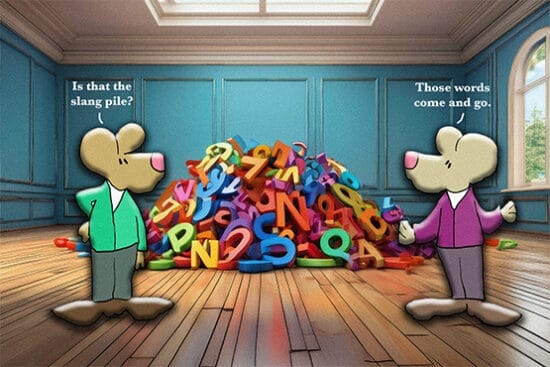
Some words are older than others. For instance, “thou” is a really old word. And then “rizz” is a word that was just added to our language a year ago.
But sometimes, language can throw off our sense of time. We may think we know a word, but do we?
Language has a habit of quietly hanging around way longer than we give it credit for.
As it turns out, there are a whole bunch of words we think of as new-ish. Slangy. But in actuality, they have been kicking around for centuries.
Yes. Centuries.
Here is a good for instance. We might think of “antivirus” as a computer thing. But. This. It was a medical term in 1914. What about “time travel”? It came around in 1914, also. And “astronaut” and “spaceship” showed up in the 1800s. Believe it or not. That is what I am told.
But the really good surprises are the slang words of years gone by. They sound like they were invented sometime between the 1950s and today. But in truth, they came from a long time ago.
Here are a few:
• Biz — shortened from “business” in the 1860s
• Celeb — clipped back in 1907
• Confab — people were “confabbing” in the early 1700s
• Cool — yes, that cool. As early as the late 1800s
• Crib — Shakespeare used it (and not in the MTV way)
• Dude — American slang since the 1880s
• Extra — slang for “over the top” since 1917
• Fly — fashionable since the 1700s
• Hang out — Victorians did it
• High — people have been getting “high” on alcohol since 1607
• Hot — attractive since the 1800s
• Hyper — short for hyperactive in the 1940s
• Legit — theater slang in the 19th century
• LOL — “little old lady” before it was laughing out loud
• Natch — jazz slang from the 1940s
• OMG — written in a letter in 1917
• Smash — a hit… or a flop, depending on the century. But since the 1700s
• So-so — used in the 1500s
• Spill — gossip has been spilled for over 200 years
Language is trendy. It comes and goes and runs the full cycle again and again.
Sure. We get a lot of new words, mostly slang, from the new generations. But words don’t get invented as often as they get reused or shortened. And then they get passed along as new.
So the next time someone tells us a word is “new,” we may want to look again.
And that is legit.
“”””””””
“Language is the archive of history.”
— Ralph Waldo Emerson
“”””””””
“Every word has its history, and every meaning its moment.”
— J. R. R. Tolkien
“”””””””
“Language is a living thing. What seems modern is often just well preserved.”
— Steven Pinker
“”””””””